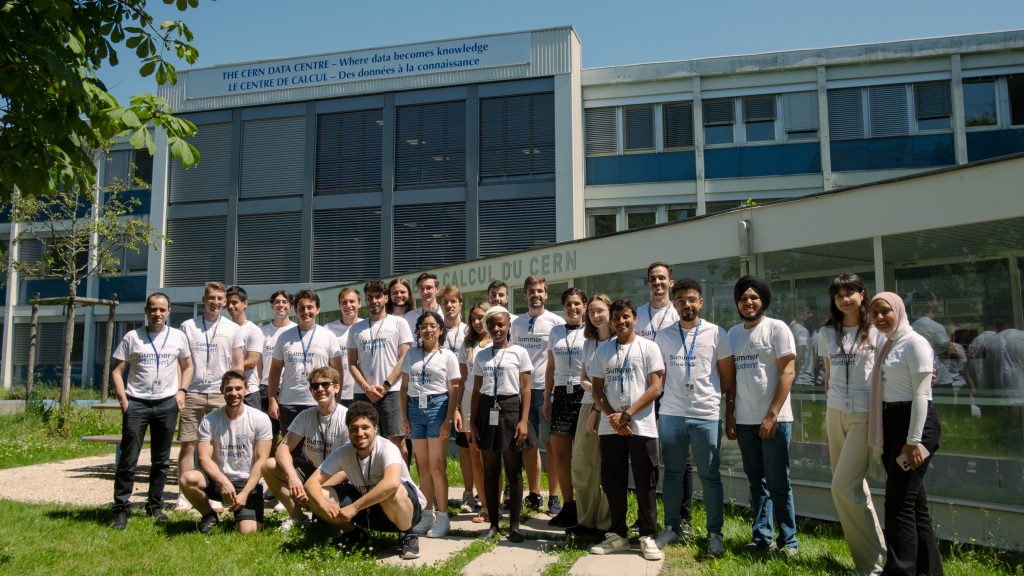
Training the IT specialists of the future

CERN openlab is a structure designed to create knowledge. We do this through research, development, and evaluation of cutting-edge computing technologies.
This knowledge is disseminated through a wide range of channels, from the publication of reports and articles to the organisation of lectures and seminars. By capitalising on our extensive network of connections from research and industry, we are able to secure speakers working at the forefront of new technologies. Wherever possible, we aim to make our lectures and seminars open to all via the Web.

In addition, we are working to ensure the next generation of IT specialists have the right skills, helping them to capitalise fully on the potential of groundbreaking new technologies. That’s why we also organise hands-on workshops and training courses — often featuring invited coaches from industry — for both members of CERN and the wider research community.
CERN openlab summer student programme
Each summer, CERN openlab runs a nine-week programme for bachelor’s and master’s students specialising in subjects related to computer science. These students work on cutting-edge projects with our collaborators, gaining hands-on experience with the latest computing technologies.
CERN is the birthplace of the World Wide Web. The laboratory hosts ground-breaking experiments and is at the heart of the Worldwide LHC Computing Grid (WLCG). It is an environment like no other, where dizzying computing challenges abound!
By joining the CERN openlab summer student programme, you will work with some of the latest hardware and software technologies and see how advanced computing tools are used in high-energy physics. Students will also participate in a series of lectures prepared for them by computing experts at CERN, in addition to the main lecture series for CERN summer students. Visits to the accelerators and experimental areas are also included in the programme.
Full details on this — and all eligibility criteria — can be found on the CERN careers website and on the CERN openlab summer student programme dedicated page.